
Dock Maintenance
5 Signs Your Dock Is Structurally Failing (And What Waterfront Owners Should Watch For)
LLCD Seawalls · March 19, 2026
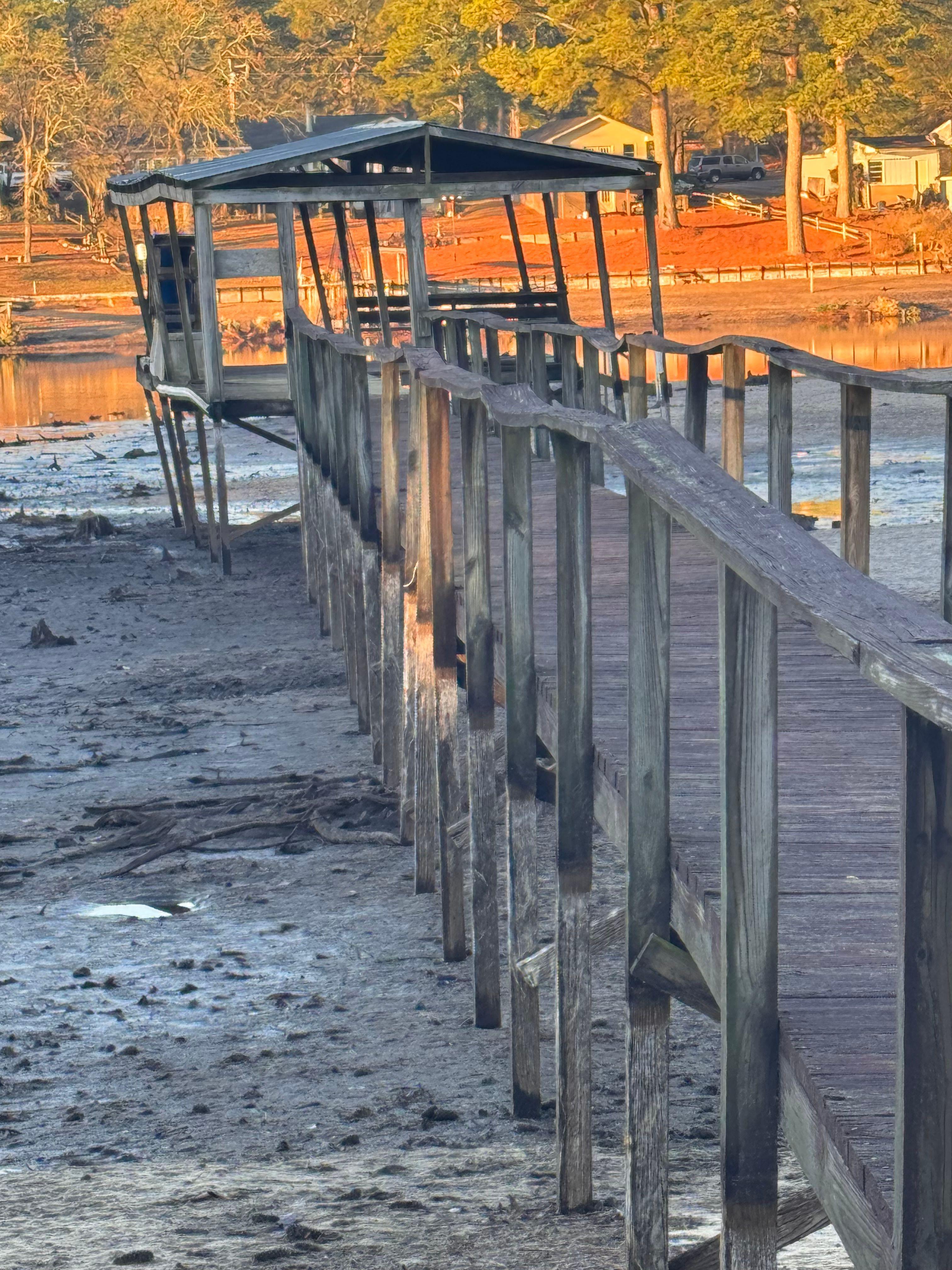
Introduction
Docks on Eastern North Carolina waterways take a beating year-round. Between the seasonal water level swings on the Neuse River, the summer UV load, the constant moisture exposure, and the mechanical stress of regular boat traffic, even a well-built dock is working hard just to hold its ground.
The good news is that structural dock failure is rarely sudden. Most docks give clear warning signs weeks or months before a problem becomes a crisis — and catching those signs early is the difference between a targeted repair and a full replacement.
Here are five of the most common indicators that a dock may be experiencing structural problems, and what Wayne, Johnston, Wilson, and Pitt County waterfront owners should do when they spot them.
1. Loose or Shifting Pilings
Pilings are the foundation of most fixed docks. When they begin to loosen or shift, the structural integrity of everything above them is compromised.
In Eastern NC freshwater environments, piling problems typically develop from one of four causes: erosion around the base of the piling, inadequate installation depth during original construction, long-term wave and boat wake exposure, or the natural deterioration of pressure-treated wood over time.
If your dock moves noticeably underfoot during normal use — not the minor flex of a healthy structure, but a lateral shift or bounce that feels wrong — that's a piling issue until proven otherwise. It warrants a professional inspection before the problem migrates upward into the framing.
2. Sagging or Uneven Dock Framing
The joist and beam system beneath your deck boards is what gives a dock platform its structural integrity. When that framing begins to sag, you'll feel it before you see it.
Signs of framing deterioration include visible dips or low spots when you look down the length of the dock, an uneven walking surface that wasn't there before, excessive flex when crossing the platform, and separation at beam-to-post connections.
Framing failure is often moisture-driven — joists that stay wet hold rot, and once rot takes hold in a primary structural member, it spreads. Catching it early means targeted sistering or replacement of individual members rather than a full reframe.
3. Rusted or Failing Hardware
Marine hardware in freshwater environments corrodes more slowly than saltwater installations, but it still corrodes — especially when non-marine-grade materials were used in the original build, which is more common than it should be on residential docks across the region.
Watch for rusted bolts or lag screws, loose or deformed structural brackets, metal connectors that have begun to flake or pit, and any fasteners that appear to be missing entirely. Hardware failure weakens the load-bearing connections between structural members, and a bracket that looks intact can be operating at a fraction of its rated strength once corrosion has worked into it.
If you're seeing surface rust on exposed fasteners, it's worth having the hardware at the primary connection points — ledger-to-post, beam-to-post, and joist hangers — evaluated by someone who knows what marine-grade failure actually looks like in the field.
4. Rotting or Deteriorating Deck Boards
Deck boards are the most visible part of a dock and typically the first place deterioration becomes obvious. They're also the most commonly deferred maintenance item on residential docks, which is how a surface problem becomes a structural one.
Soft or spongy areas underfoot, visible cracking and surface checking, boards pulling away from the framing below, and any discoloration that suggests fungal growth are all signals that your decking has reached the end of its service life. Left unaddressed, deteriorated decking allows moisture to penetrate directly into the joist system underneath — turning a decking replacement into a full structural job.
Pressure-treated wood decking on docks in this region typically has a functional service life of 15 to 25 years under normal conditions. Composite decking systems extend that to 25 to 35 years and eliminate most of the rot-related risk entirely.
5. Shoreline Movement or Erosion
A dock is only as stable as the ground it's connected to. Shoreline erosion is one of the most common and most overlooked contributors to dock structural problems in Eastern North Carolina, particularly along properties with unprotected soil banks.
Warning signs include soil loss visible near the dock's shore connection point, exposed roots or structural supports that were previously below grade, a change in the dock's angle or elevation relative to the shoreline, and visible washout on the bank face during or after heavy rain events.
When shoreline erosion begins to affect a dock, the fix isn't just dock repair — it's shoreline stabilization first, dock repair second. Addressing the erosion source protects not only the dock but the full value of the waterfront property.
Conclusion
Most dock structural problems follow a predictable pattern: minor symptoms appear, get deferred, and compound over time until what could have been a repair becomes a replacement. The five signs above rarely appear all at once — they show up one at a time, gradually, which is exactly why routine inspection matters.
If you're seeing any of these warning signs on a dock in Wayne, Johnston, Wilson, Pitt, Lenoir, or Duplin County, LLCD offers free site evaluations. We're local, licensed, and insured — and we're only a phone call away.