
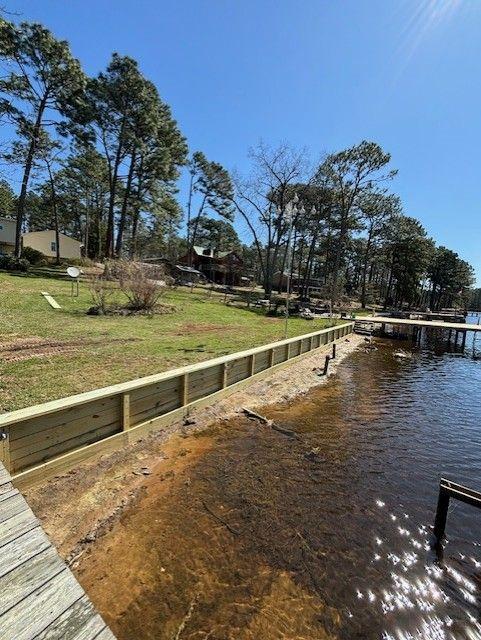
Seawalls & Shoreline
Shoreline Stabilization
Shoreline erosion threatens waterfront properties, destabilizes foundations, and damages ecosystems.
Shoreline erosion threatens waterfront properties, destabilizes foundations, and damages ecosystems. LLCD offers comprehensive shoreline stabilization solutions—from natural riprap installations to engineered seawalls—designed to protect your property while working with natural processes.
**Causes of Shoreline Erosion**
Wave action, boat wake, seasonal water level fluctuations, and heavy rainfall all accelerate bank erosion. In Eastern North Carolina, freshwater lakes and river systems experience constant hydrological stress. Without intervention, erosion can claim 1–3 feet of shoreline per year.
The Neuse River, Contentnea Creek, and hundreds of smaller lakes and ponds create constant erosion pressure on waterfront properties. Seasonal flooding, ice loading in winter, and heavy summer thunderstorms all contribute. Over time, even stable banks become unstable.
**Consequences of Ignoring Erosion**
Unchecked shoreline erosion leads to:- Foundation damage and structural failure- Loss of usable property- Exposure of utilities and septic systems- Ecosystem damage and habitat loss- Decreased property value- Liability if erosion damages neighboring properties
**Stabilization Solutions**
LLCD tailors stabilization to your site. We evaluate slope angle, water depth, boat traffic, and regulatory constraints to recommend the best approach:
**Riprap Installation** (cost varies, indefinite lifespan) uses loose stone or boulders to dissipate wave energy and stabilize slopes. Riprap is cost-effective, natural-looking for residential properties, and suitable for low-to-moderate stress sites. Works well combined with native vegetation.
**Bioengineering** (varies, 20–40+ years) adds native wetland vegetation—marsh grasses, willows, and other plants—to stabilize banks naturally. Often combined with riprap for dual benefits: natural appearance and effective erosion control.
**Bulkheads and Seawalls** provide definitive, long-term erosion control. Vinyl, steel, or concrete structures hold back the bank completely. Best for high-stress sites or when property protection is critical.
**Hybrid Approaches** combine multiple solutions: riprap for wave energy absorption, vegetation for root stabilization, and strategic bulkheading for critical areas.
**Why Professional Evaluation Matters**
Shoreline stabilization isn't one-size-fits-all. A solution that works for a calm pond won't work for an active river. LLCD evaluates your specific site—water depth, flow velocity, soil type, slope angle, boat traffic, and regulatory status—to recommend cost-effective solutions.
Some properties need only riprap and vegetation. Others require a full seawall. LLCD provides honest recommendations based on your site's actual conditions and your budget constraints.
**The LLCD Approach**
We start with assessment. We listen to your erosion concerns. We evaluate the site professionally. Then we recommend solutions scaled to your needs and budget. You get honest advice from a local contractor who understands Eastern North Carolina waterfront dynamics.