
Seawalls & Shoreline
Seawall Construction
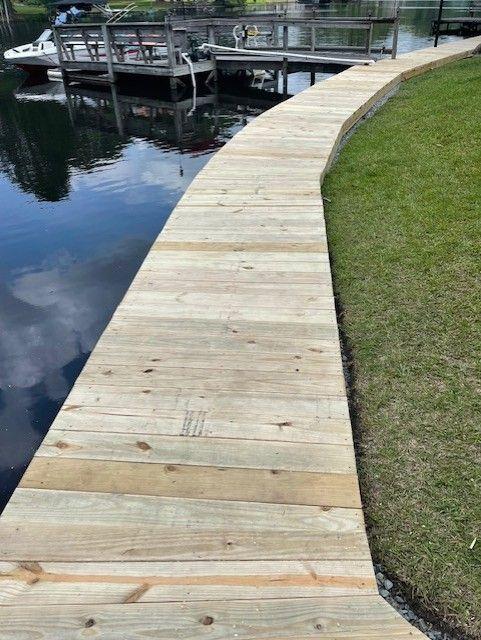
A seawall is a structural barrier built along the shoreline to prevent erosion, protect property, and stabilize waterfront landscapes.
A seawall is a structural barrier built along the shoreline to prevent erosion, protect property, and stabilize waterfront landscapes. At LLCD, we specialize in designing and installing durable seawalls that withstand the demands of freshwater and coastal environments across Eastern North Carolina.
When Do You Need a Seawall?
Seawalls are essential when your property experiences active erosion, wave action, or hydrological stress from adjacent water bodies. Common signs include sloping banks, exposed tree roots, soil loss, or structural settlement near the waterline. In Eastern North Carolina, seawalls are critical for protecting homes, commercial properties, and municipal infrastructure along the Neuse River, Contentnea Creek, and numerous lakes and ponds.
Seasonal water level fluctuations, boat wake, heavy rainfall, and ice loading all accelerate bank erosion. Without intervention, shorelines can lose 1–3 feet of land per year. A professional seawall not only stops erosion but preserves your property's structural integrity, prevents damage to foundations and utilities, and protects your investment for decades.
Why LLCD Seawalls?
Owner Lonnie Dean has personally built seawalls in challenging freshwater environments for over a decade, experience he now brings to LLCD full-time. We use marine-grade materials, professional engineering practices, and proven installation techniques. Every seawall we build is backed by a warranty and supported by local, owner-operated service—we're only a phone call away.
Our team understands the specific demands of Eastern North Carolina waterfront conditions. We evaluate hydrostatic pressure, soil composition, water depth, seasonal fluctuations, and regulatory requirements. This expertise allows us to recommend the right material for your site and budget.